
Water damage rarely announces itself dramatically at first. More often, it begins quietly: a slow roof leak, a hairline crack in a foundation wall, moisture seeping behind drywall. Over time, that hidden exposure weakens structural materials until gravity takes over. When ceilings sag, floors dip, or walls bow inward, homeowners are often shocked by how suddenly a space can become unsafe.
Caving in from water damage is not a cosmetic problem. It is a structural failure caused by prolonged exposure to moisture that compromises the load-bearing capacity of a building. Understanding how and why this happens is essential for prevention, early intervention, and informed repair decisions.
This guide explains how water damage leads to structural collapse, the warning signs most people miss, and what homeowners can do to protect their property before damage becomes irreversible.
How Water Damage Leads to Structural Failure
Water is one of the most destructive forces a building can face—not because it is aggressive, but because it is persistent. Construction materials are designed to handle weight and pressure under dry conditions. When moisture enters the system, those assumptions fail.
Loss of Material Strength
Wood framing, subfloors, and roof trusses absorb water readily. As moisture content rises:
Wood fibers swell and weaken
Nails and fasteners loosen as materials expand and contract
Load paths shift, placing stress on areas not designed to carry it
Over time, repeated wetting and drying cycles cause permanent loss of structural integrity. Even if the surface appears dry later, internal damage may already be done.
Progressive Rot and Decay
Organic materials such as wood and paper-faced drywall are vulnerable to fungal growth once moisture persists beyond 24–48 hours. Rot does not happen overnight, but once it starts, it accelerates. Structural members can lose significant load-bearing capacity while still looking intact from the outside.
Soil Saturation and Foundation Movement
Water damage is not limited to interiors. Poor drainage, flooding, or broken plumbing can oversaturate soil around foundations. When soil shifts or erodes:
Foundations can settle unevenly
Basement walls may bow or crack
Floors above begin to slope or separate
These changes place stress throughout the structure, increasing the risk of partial or total collapse.
Areas Most Likely to Cave In From Water Damage
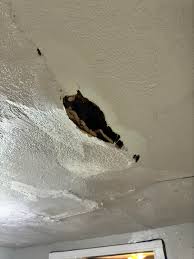
Some parts of a building are particularly vulnerable because they combine load-bearing responsibility with frequent water exposure.
Ceilings
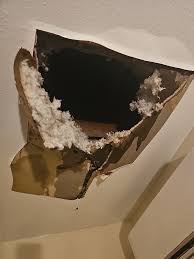
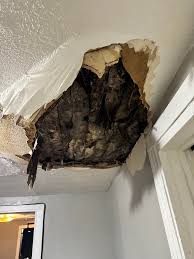
Ceilings often fail first because water collects above them. Common causes include roof leaks, overflowing bathrooms, and burst pipes. Drywall becomes saturated, heavy, and eventually detaches from joists. In severe cases, entire ceiling sections collapse without warning.
Floors
Subflooring absorbs water from below (basements, crawl spaces) or above (appliance leaks). As it weakens, floors begin to feel spongy, slope, or crack. In extreme cases, joists rot to the point where floors give way under normal foot traffic.
Roof Structures
Roofs are designed to shed water, not hold it. When drainage fails due to clogged gutters, ice dams, or damaged shingles, water infiltrates roof decking and trusses. Snow load combined with hidden rot is a common trigger for roof collapse.
Basement and Foundation Walls
Hydrostatic pressure from saturated soil pushes inward on foundation walls. Over time, this can cause cracking, bowing, or sudden failure—especially in older masonry foundations.
Warning Signs That Collapse May Be Imminent
Structural collapse from water damage rarely happens without warning. The challenge is that many signs are subtle or misunderstood.
Visible Indicators
Sagging or bulging ceilings
Cracks that widen over time, especially near doors and windows
Floors that slope or feel soft underfoot
Doors and windows that suddenly stick or no longer close properly
Moisture-Related Clues
Persistent musty odors
Discoloration or bubbling paint
Repeated mold growth in the same areas
Condensation where it previously did not occur
Sounds and Movement
Creaking or popping noises unrelated to temperature changes
Noticeable vibration when walking across a room
Small debris or dust falling from ceilings or beams
Any combination of these signs warrants immediate professional evaluation.
Why DIY Fixes Often Make the Problem Worse
One of the most dangerous misconceptions about water damage is that surface repairs solve structural problems. Painting over stains, patching drywall, or installing new flooring without addressing moisture sources traps water inside the structure.
This creates a concealed failure mode where materials continue to degrade out of sight. By the time visible collapse occurs, repairs are far more extensive and costly.
Temporary fixes may improve appearance, but they do not restore load-bearing capacity.
When a Structure Becomes Unsafe to Occupy
A building does not need to fully collapse to be dangerous. Partial structural failure can make a space unsafe long before walls or ceilings fall.
Red flags that require immediate evacuation include:
Active ceiling sagging with visible water pooling
Large cracks accompanied by shifting sounds
Sudden changes after storms or flooding
Any collapse involving framing, not just finishes
Local building authorities or emergency services may declare a structure unsafe if collapse risk is high. Guidance from organizations such as FEMA consistently emphasizes early evacuation when structural integrity is in question.
Professional Assessment and Repair Options
Addressing caving in from water damage requires a coordinated approach.
Step 1: Identify and Stop the Water Source
Repairs are meaningless until moisture intrusion is eliminated. This may involve:
Roof repair or replacement
Plumbing repair
Drainage and grading corrections
Waterproofing systems
Step 2: Structural Evaluation
A licensed structural engineer can assess:
Load-bearing capacity
Extent of rot or corrosion
Whether reinforcement or replacement is required
This assessment guides safe, code-compliant repairs.
Step 3: Restoration and Reinforcement
Depending on severity, repairs may include:
Replacing compromised beams or joists
Sistering new framing alongside damaged members
Installing support posts or footings
Foundation wall stabilization
Professional water damage restoration teams often work alongside engineers and contractors to ensure both moisture remediation and structural repair are addressed together.
Insurance Considerations
Water damage coverage varies widely by policy. Sudden events such as burst pipes are often covered, while long-term leaks may not be. Structural collapse resulting from excluded water damage can leave homeowners responsible for significant costs.
Documenting early signs, maintenance efforts, and professional inspections strengthens claims and helps avoid disputes.
Preventing Structural Collapse From Water Damage
Prevention focuses on controlling moisture before it compromises structure.
Practical Preventive Measures
Inspect roofs, flashing, and gutters annually
Ensure proper grading and drainage away from foundations
Address plumbing leaks immediately, no matter how small
Use dehumidifiers in basements and crawl spaces
Schedule periodic professional inspections for older homes
Early investment in maintenance is far less expensive than structural reconstruction.
Long-Term Impact on Property Value and Safety
Beyond repair costs, water-related structural damage affects resale value, insurability, and occupant safety. Homes with documented structural issues often require disclosure, extended repairs, or price reductions.
More importantly, unchecked water damage poses real physical risk. Structural collapse injuries are not theoretical; they occur when warning signs are ignored.
References
FEMA – Guidance on structural safety, flood damage assessment, and when buildings become unsafe after water intrusion.
International Code Council – Publisher of the International Residential Code (IRC) and International Building Code (IBC), which define structural repair and safety requirements after water damage.
American Society of Civil Engineers – Engineering standards and research related to structural failure, load-bearing systems, and material degradation.
Institute of Inspection Cleaning and Restoration Certification – IICRC S500 standards for professional water damage restoration and material removal thresholds.
U.S. Geological Survey – Research on soil saturation, groundwater movement, and foundation instability linked to prolonged water exposure.
FAQs
-
How long does it take for water damage to weaken structure?
In some cases, weeks. In others, years. The rate depends on moisture levels, materials, and ventilation.
-
Can a ceiling collapse suddenly from water damage?
Yes. Once drywall and framing reach a critical saturation point, collapse can occur with little warning.
-
Is mold always present when structural water damage exists?
Not always visibly, but prolonged moisture almost always creates conditions suitable for mold growth inside walls or framing